Wedges vs. In-Ear Monitors: Choosing a Monitor Setup for Your Show
Floor wedges or in-ear monitors? Compare sound, stage volume, cost, setup time and performer comfort, and learn how hybrid monitor setups work for bands, vocalists and corporate presenters.
By Paris Backline · · 3 min read
Performers need to hear themselves. How they do it — loudspeakers on the floor or earphones in their ears — shapes the whole stage. Here's how floor wedges and in-ear monitors compare, and how to pick the right setup for a show.
Floor wedges
A wedge is a monitor speaker on the floor, angled up at the performer. Each wedge (or group of wedges) gets its own mix.
Strengths
Natural feel: performers hear the room and each other through the air
No RF: no frequencies to coordinate
Simple: performers just walk on and play
Comfortable for performers who don't like earphones
Trade-offs
Stage volume: wedges add sound to the stage, which bleeds into vocal mics and the audience mix
Feedback risk: loud wedges and open mics can ring
Inconsistent: the sound changes with every room and every step away from the wedge
Stage space and sightlines: wedges take floor space and can be visible on camera
In-ear monitors
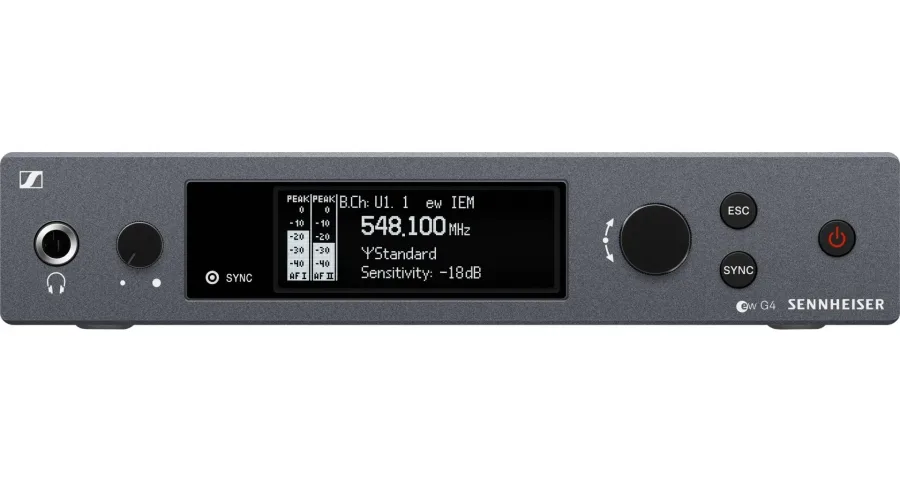
An IEM system sends a mix to earphones, usually wirelessly, with a bodypack receiver on each performer. Systems like the Sennheiser EW IEM G4 are common on riders.
Earphones: custom molds are best; universals need hygiene planning
Hybrid setups
Many shows mix both approaches:
The lead vocalist and band on in-ears, with side-fills for energy on stage
A drummer on a wired in-ear amp plus a drum fill sub for feel
Guests or presenters on wedges while the band uses in-ears
Background vocalists sharing an in-ear mix, each with their own pack
Corporate presenters
Presenters often need a confidence monitor wedge for program audio, or a discreet in-ear for producer cues. For panels and keynotes, a small wedge at low level is usually enough. For hosts taking cues from a producer, an IEM bodypack with a single earpiece works well.
How to decide
Question
Leans toward
Is the act already on in-ears?
IEMs — match their rider
Is stage volume a problem (small room, quiet genre, broadcast)?
IEMs
Are performers new to in-ears with no rehearsal time?
Wedges
Is there a heavy RF environment with many channels already?
Wedges, or wired IEMs where possible
Is the show on camera?
IEMs (cleaner stage)
Planning the order
For wedges: number of mixes, number of wedges per mix, and amplifiers or powered wedges.
For IEMs: number of mixes, stereo or mono, number of packs per mix (plus a spare), earphones, antenna and combiner needs, and the venue address for frequency planning. Our EW IEM G4 setup guide covers the details.